
Hold the dial yourself
This is the simulation itself, not a recording. Drag the die-back gauge and the stand answers; drag the timeline to replay the whole arc; switch stem density and watch the same rule at four scales. Every number is measured, per frame, with one fixed estimator.
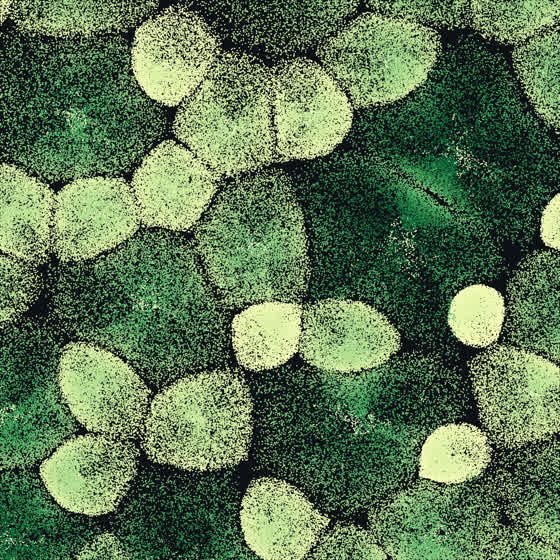
What is moving
Occupancy
A branch tip that reaches space a neighbour already fills stops where it is. Taller trees claim contested ground first, so every boundary remembers both crowns that shaped it.
Abrasion
Where crowns touch, the wind grinds the meeting tips away. The simulation retreats each contacting branch by a fixed fraction of its own length. That fraction is the dial in the film.
No gap is drawn
The channel width is set nowhere in the code. It is an equilibrium between growth pressure and contact loss, so it scales with the crowns themselves.
The stand, not the tree
Remove either neighbour and the channel between them vanishes. The pattern lives between trees, which is why it must be generated jointly or not at all.