Psychological Indicator Analysis — Children's Drawing Signals
Authors: Mousumi, Thomas
Affiliation: University of Redlands
Duration: Oct 2025 – Present
Overview
Children's drawings often contain measurable visual patterns that may correlate with developmental and psychological indicators. This research adapts large-scale vision-language models to quantify those patterns and support a non-clinical screening workflow for developmental psychology.
Visual Examples
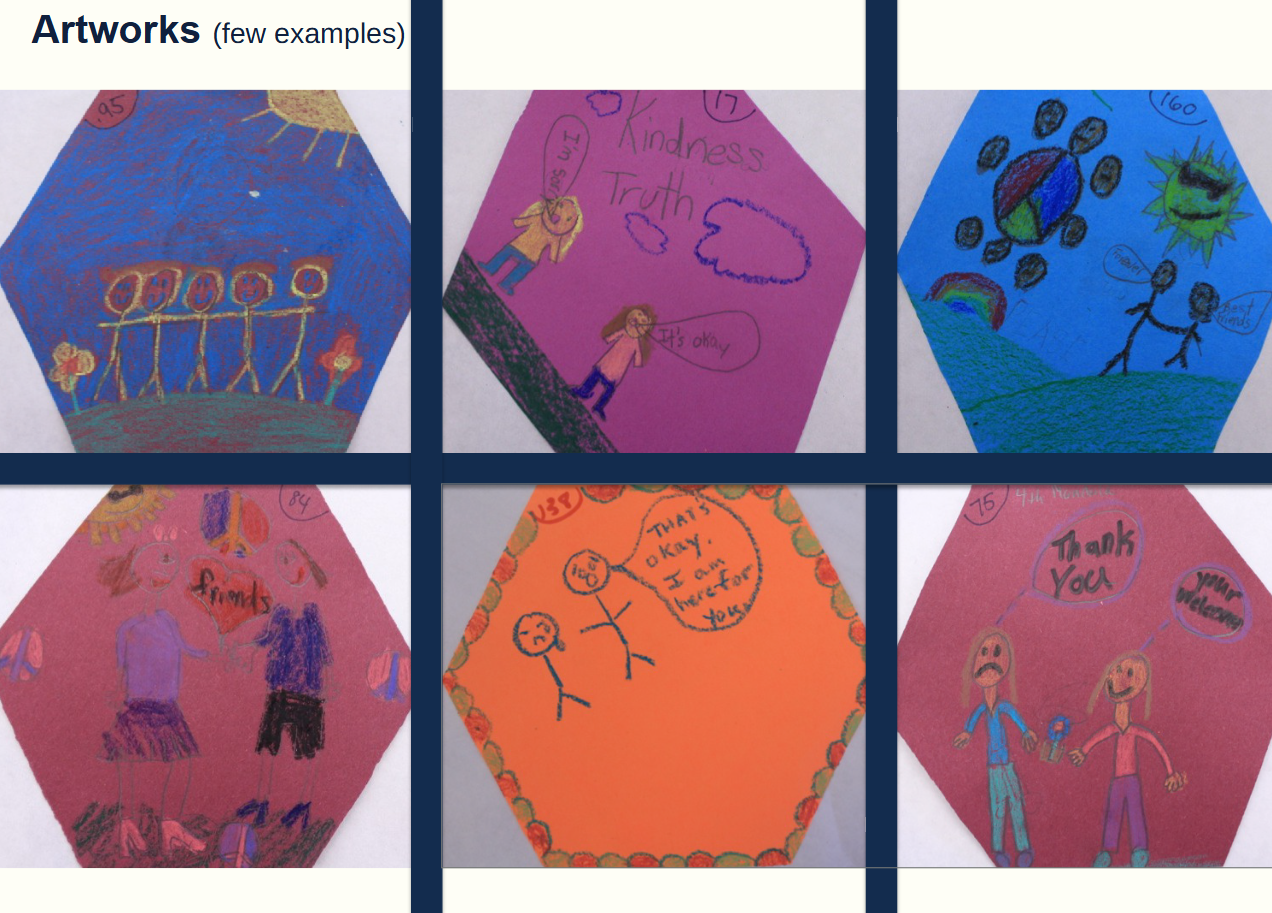
These examples illustrate the diversity of composition, symbols, color palettes, and text elements that the analysis pipeline aims to quantify in a consistent and interpretable way.
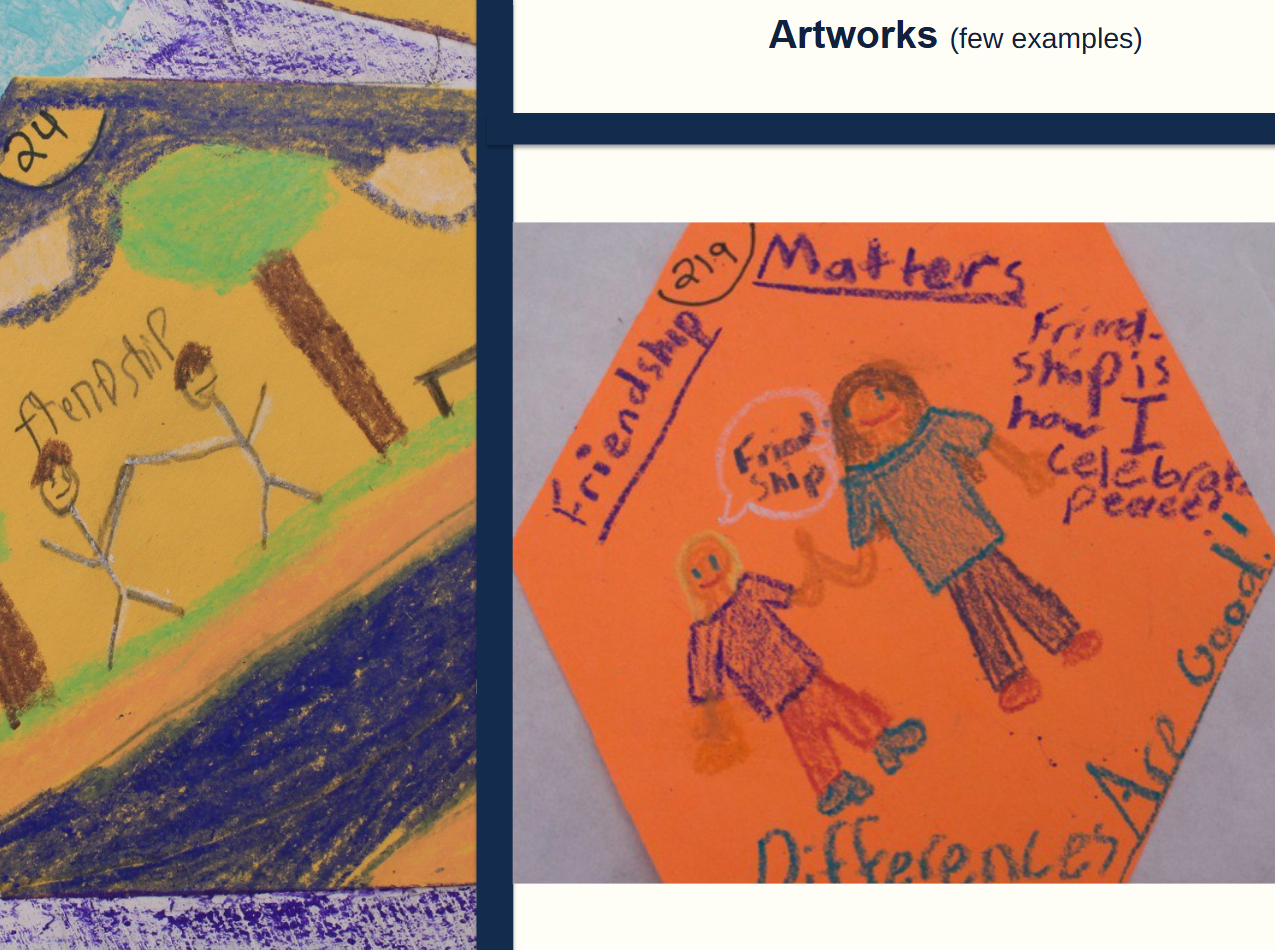
The close-ups highlight fine-grained cues such as stroke density, spatial layout, object presence, and written phrases, which can be mapped into structured attributes for downstream review.
This video is an AI-generated animated version of a child's drawing, used to explore how model-based analysis behaves under stylistic transformations and motion-based rendering.
Approach
- Structured signal extraction: Convert free-form drawings into consistent, interpretable attributes (e.g., composition, symmetry, object presence, color usage).
- Vision-language adaptation: Calibrate model outputs to improve stability on sparse, abstract, and child-like sketches.
- Human-in-the-loop workflow: Designed to assist screening and triage, not replace professional diagnosis.
Intended Workflow
- Collect drawing samples with consent and minimal metadata.
- Run analysis to produce a compact indicator profile and qualitative explanations.
- Surface patterns for practitioners to review and decide on next steps.
Why It Matters
- Expands access to early, low-friction screening signals in resource-limited settings.
- Prioritizes interpretability so practitioners can validate model outputs.
- Encourages careful deployment with clear scope and ethical guardrails.